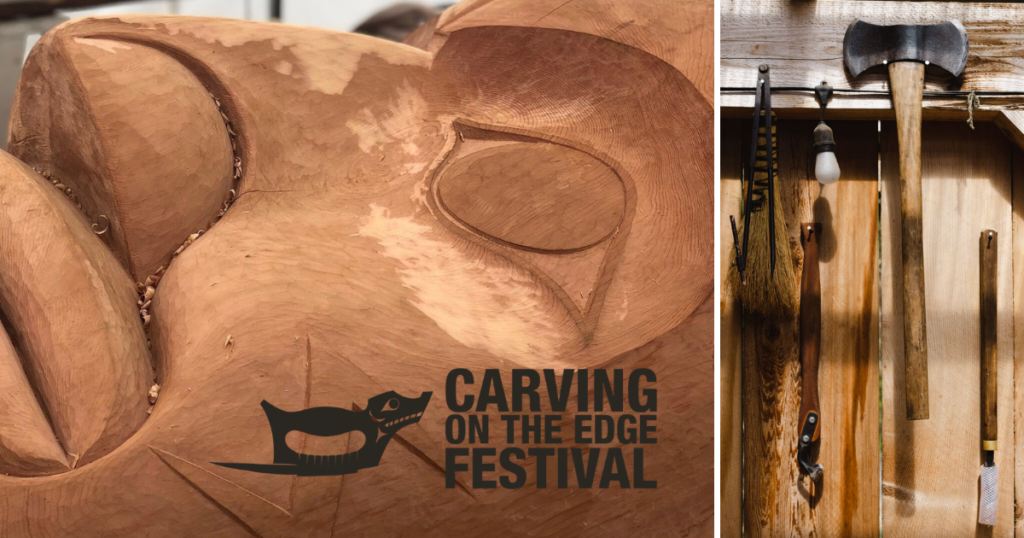
A new carving facility now welcomes visitors as they arrive at the Clayoquot Campus. Completed in 2025, it features a covered carving studio, as well as an indoor art gallery and workshop space designed for resident carvers and community programs.
Although this purpose-built facility is new, carving has been an active part of the Clayoquot Campus since 2021. During this time, Nuu-chah-nulth and local carvers have worked in temporary on-site spaces to create totems, welcome figures, dugout canoes, and smaller works of art.
This new carving facility strengthens the preservation of intergenerational knowledge and enhances access to cultural education. In Nuu-chah-nulth culture, governance and laws are depicted through art. In addition to being beautiful and striking, Nuu-chah-nulth art also carries important teachings and laws about our roles and responsibilities toward each other and the land.
Indigenous stewardship of lands and waters includes the continuation of ancient practices of carving and wood working, as exemplified through the legacy of the Carving On The Edge Festival who gives life to our Carving Facility.


TRANSFORMATION: The New Home of Carving on the Edge Festival 2026 at Naa’Waya’Sum Garden Gallery
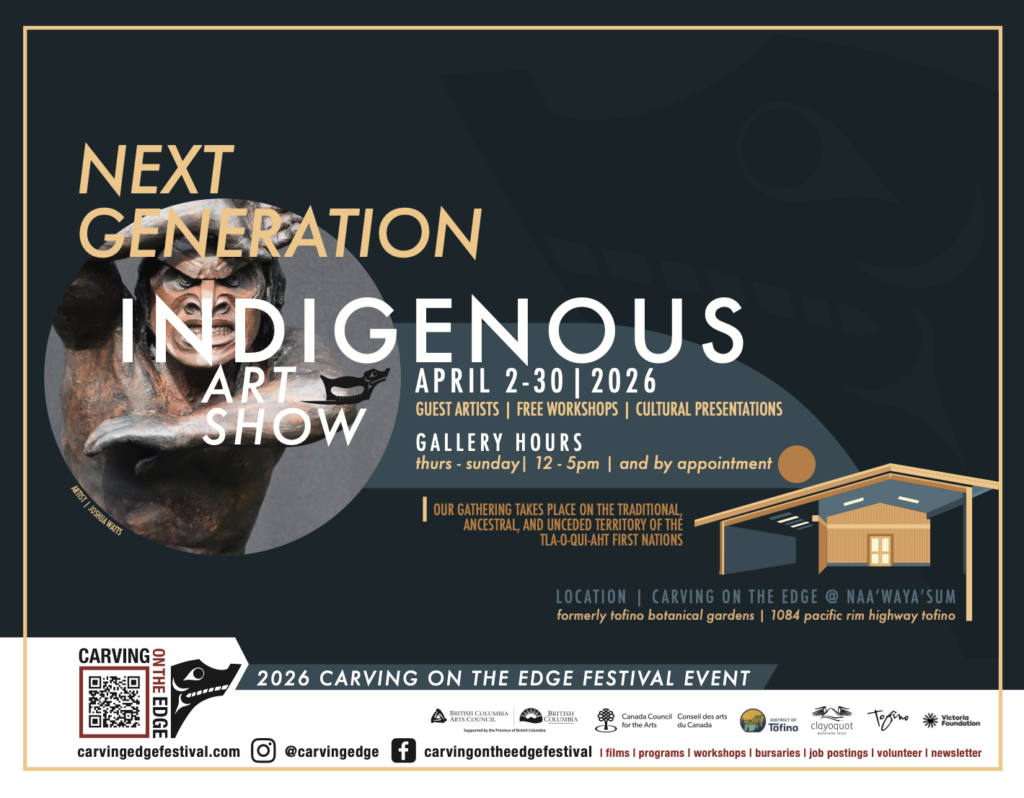
The gallery will be open Thursday to Sunday 12-5 pm, and by appointment.
Our gatherings take place on the traditional, ancestral and unceded territory of the Tla-o-qui-aht First Nations.

Next Generation Indigenous Art Show opens April 2 and runs through April 30, 2026 at the Carving Gallery at Naa’Waya’Sum Garden.
This exhibition highlights five emerging First Nations artists — a new generation of voices rooted in tradition while shaping their own artistic paths forward. Their work reflects a deep connection to ancestral knowledge, carving practices, and cultural teachings, while expanding into contemporary expression. Guided and inspired by master carvers, these artists are carrying knowledge forward — growing, evolving, and sharing their stories with the world.
Throughout April, Carving on the Edge will also host guest artists, FREE workshops, and cultural presentations, creating space to gather, learn, and connect.
This project was made possible thanks to support from First Peoples’ Cultural Council Heritage Infrastructure Fund, Island Coastal Economic Trust, Grace Projects Inc., the University of Victoria’s Civil Engineering Department, and RJC Engineers.